


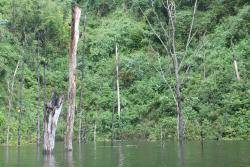
After the meeting organized at Ekologistak Martxan that Ainara Alonso recently commented in this same Ateneo, Karmele told us about the presentation that I attach below:
In it you can see photographs and data of the reforestation project that Karmele, through International Animal Rescue and with the collaboration of Naider and Ekopass, has led for the last two years in Indonesia. Starting from the initial financing of the AECID, the project continued with another contribution from Bilbao City Council. Currently, the project can be terminated, which covers an area of more than 90 hectares where more than 37,000 trees have been planted.
Looking ahead, Karmele told us that a very interesting line of work to protect the jungle in Indonesia can come from the projects REDD (Reducing Emissions form Deforestation and Degradation); It is about conserving areas of primary forest through 60-year concessions (extendable for another 30 years), actively managing the ecosystem. In this way, in addition to sustainable forestry, emission rights are generated that the affected countries can acquire. In other words, these are projects that link the payment for environmental services to the mechanism for exchanging greenhouse gas emission rights that emanates from the Kyoto Protocol. Even with the last Durban pantomime, an interesting and hopeful line of work for sure.
The presentation includes some examples of REED projects launched in Indonesia in recent years; the areas covered by REED are considerable (one of them is 80,000 hectares), and they have already obtained financing from companies such as Shell Canada Ltd, Gazprom Marketing and Trading or Australia Macquarie Bank. Oil companies and banks protecting the jungle, not only for image, but because they consider these projects as an investment that, in the future, can have considerable returns if the mechanism for buying and selling emission rights is consolidated.
Related Posts:
Some more notes about Indonesia