The capacity to act on the productive system will determine which territories lead and which fall off the new industrial map.
For years we have repeated an idea that, whilst true, is beginning to feel insufficient: industry matters because it creates quality jobs and sustains the welfare state. It does. But stopping there is, today, a failure to understand what is at stake. Industry is no longer just an economic sector. It is now critical infrastructure. The enabling condition for almost everything else: there is no energy transition without an energy industry; no circular economy without a materials industry; no digitalisation without a technology industry; no strategic sovereignty without productive capacity of one’s own.
In this context, talking about industry means talking about a model of society, about decision-making power, about one’s position in the world. Some territories are advancing — repositioning their industry, capturing investment, consolidating capabilities. Others, starting from similar foundations, are losing weight, growing more dependent on the outside, or being left off the new industrial maps now being drawn.
Agency is the ability of a territory — its businesses, its institutions, its ecosystem — to shape its own future rather than merely react to it.
The difference does not lie in the diagnosis. Nor solely in resources. It lies in the capacity to act on them. We call that capacity agency. Agency is the ability of a territory — its businesses, its institutions, its ecosystem — to shape its own future rather than merely react to it.
Some territories wait for funding to arrive; others design projects and go out to find it. Some productive systems describe their weaknesses; others reorganise their value chains to address them. Some industrial spaces wait to be regenerated; others become environments of experimentation, collaboration, and transformation.
This is not a minor distinction. It is, in all likelihood, the variable that weighs most heavily in the final outcome. Industry is today the primary arena in which that agency is put to the test. For decades, competitiveness has been interpreted in sectoral terms — how many firms there are, how much employment they generate, what turnover they achieve. That approach remains useful for describing the economy, but it is insufficient for understanding it — and, above all, for transforming it.
What matters is not only what is produced, but how value creation is organised. Who designs. Who integrates. Who certifies. Who accesses the market. Who sets the standards. In other words, what position each actor occupies within the value chain. And at a moment when global chains are being reconfigured for technological, ecological, and geopolitical reasons, that position determines a territory’s capacity to capture value — or to depend on it. Not all links in the chain are equivalent. And not all industrial strategies grasp that.
The recent adoption of the Industrial Accelerator Act by the European Commission is, in this sense, revealing. Beyond its specific content, the IAA marks a paradigm shift: the move from a vision in which the market was the end goal to one in which the market becomes an instrument of strategic sovereignty — or strategic autonomy, if a less radical term is preferred.
Europe has accepted that it cannot indefinitely delegate its industrial base to third parties without compromising its decision-making capacity. That the ecological transition, technological security, and economic resilience ultimately depend on its productive capacity. But this new logic will not unfold evenly.
The IAA will not benefit everyone equally. It will favour those territories capable of positioning themselves quickly, of meeting new requirements — traceability, local content, carbon footprint — and of reorganising their value chains before the new industrial map is set in stone. Again, the difference will not lie in having industry. It will lie in knowing how to activate it.
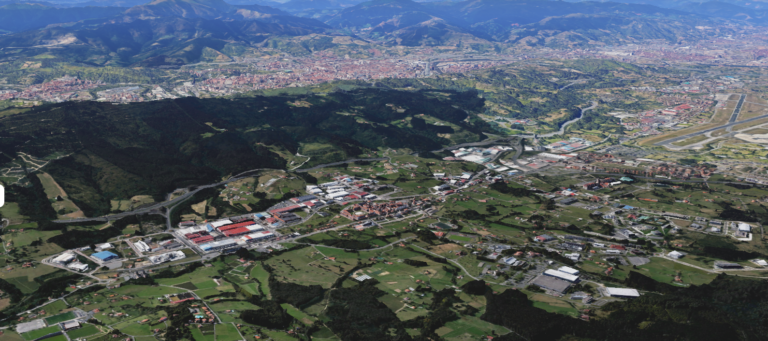
And that activation happens in the territory. It is in cities, in comarcas, in industrial estates where strategies become concrete decisions. Where planning is translated into projects. Where industry ceases to be a statistical category and becomes a living system. In this context, the relevant question is no longer whether a territory has industry. It is whether it is capable of understanding its position in value chains; whether it can reorganise its productive system to capture more value; whether it can mobilise its actors around shared projects; whether it can sustain decisions over time, even when short-term pressures push in the opposite direction.
Because, ultimately, the difference between territories will not be made by those with the most resources, but by those with the greatest capacity to act on them. The difference will be made by agency. And industry is, today, the place where that difference is decided.
Because, ultimately, the difference between territories will not be made by those with the most resources, but by those with the greatest capacity to act on them. The difference will be made by agency. And industry is, today, the place where that difference is decided.
Carlos Cuerda. Economist. Partner
Illustration: Steve Johnson