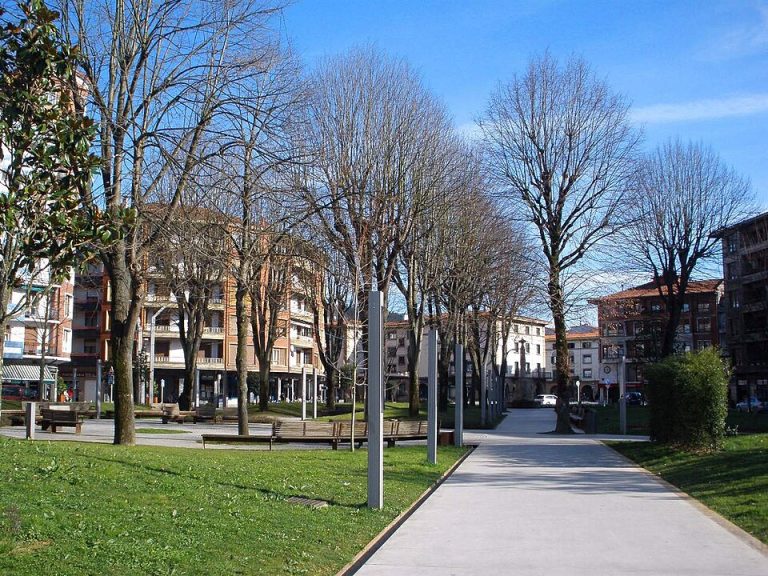
Leioa City Council is developing a municipal climate shelter network aimed at strengthening the municipality’s adaptive capacity in the face of rising extreme temperatures and their effects on the health and wellbeing of the population.
The project addresses the need to identify urban spaces capable of providing thermal comfort and climate protection during intense heat episodes, particularly for the most vulnerable groups. The initiative encompasses both indoor shelters — accessible, climate-controlled public facilities — and outdoor spaces offering favourable conditions of shade, vegetation, and rest.
NAIDER supports the City Council in the territorial and climatic analysis of the municipality, the definition of technical criteria, and the design of an integrated network tailored to the urban and social characteristics of Leioa. The work combines spatial data, environmental variables, and accessibility criteria to identify priority intervention areas and ensure balanced coverage across the territory.
The proposal incorporates a cross-cutting vision of urban adaptation: climate shelters are not merely response spaces for extreme episodes, but also elements that help improve environmental quality, the use of public space, and long-term urban resilience. The project thus advances the integration of climate adaptation into municipal planning and local urban policies, strengthening the municipality’s preparedness for increasingly frequent and intense climate scenarios.
Picture: Pinasolo park, Leioa Council